Exploring Language for Enhanced AI Interaction

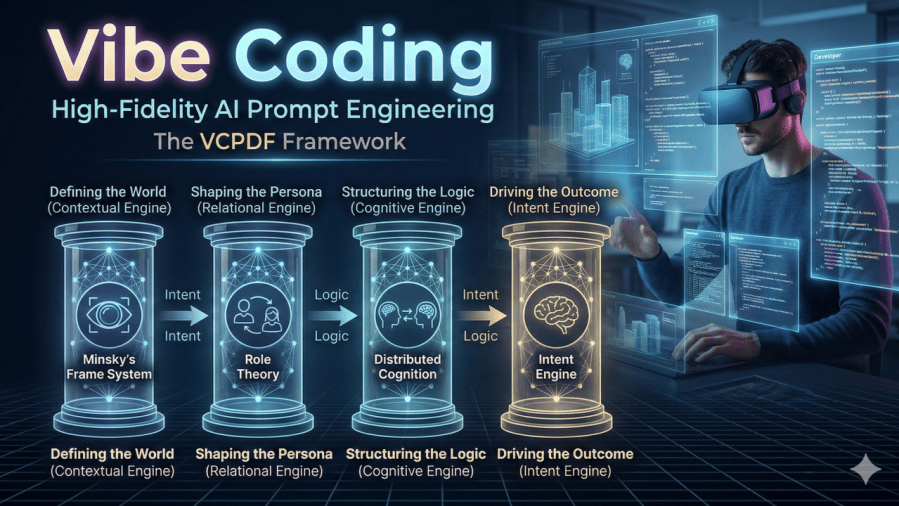
Introduction AI systems offer a unique opportunity for us to deepen our understanding of communication. Having studied AI in the early 1980s, I decided to revisit some theories from that time to see how they might help in extracting useful information from AI Systems. The first theories I explored were: Minsky's Frame System Theory. Role…

Integrated Prompt Design Framework (IPDF)

Crafting effective prompts is an art that requires understanding how language functions in various contexts and how individuals respond to different roles and scenarios. By integrating insights from Role Theory, Minsky's Frame System Theory, Speech Acts, and Halliday's Systemic Functional Grammar, one can design clear prompts, contextually rich, and purposefully structured. This article explores how…

ChatGPT and English language proficiency, or Language Frames: Speech Acts, Role Theory, and Minsky’s Frames

Introduction In the digital age, artificial intelligence and machine learning have revolutionized numerous fields, with natural language processing standing at the forefront. Among the many achievements in this domain, ChatGPT has emerged as a fascinating example of how machines can interact with human language. But what underpins this sophisticated interaction, and how can we leverage…

Mindfulness and English Language Proficiency

Introduction In a world increasingly connected by the English language, mastering its intricacies can be both a necessity and a challenge. Mindfulness, the art of present-moment awareness, offers unexpected yet profound ways to enhance English proficiency. This article uncovers the synergy between mindfulness and English language learning, focusing on vocabulary enhancement, style refinement, and applications…

Transcending Dualistic Thinking: A Madhyamika Perspective

Introduction Dualistic thinking, which partitions the world into pairs of opposites, has long been a fundamental aspect of human cognition. Within the Madhyamika Buddhist tradition, transcending this binary approach is considered essential for understanding the nature of reality and for attaining enlightenment. This article explores the Madhyamika perspective on non-dualistic thinking, focusing on analytical meditation,…